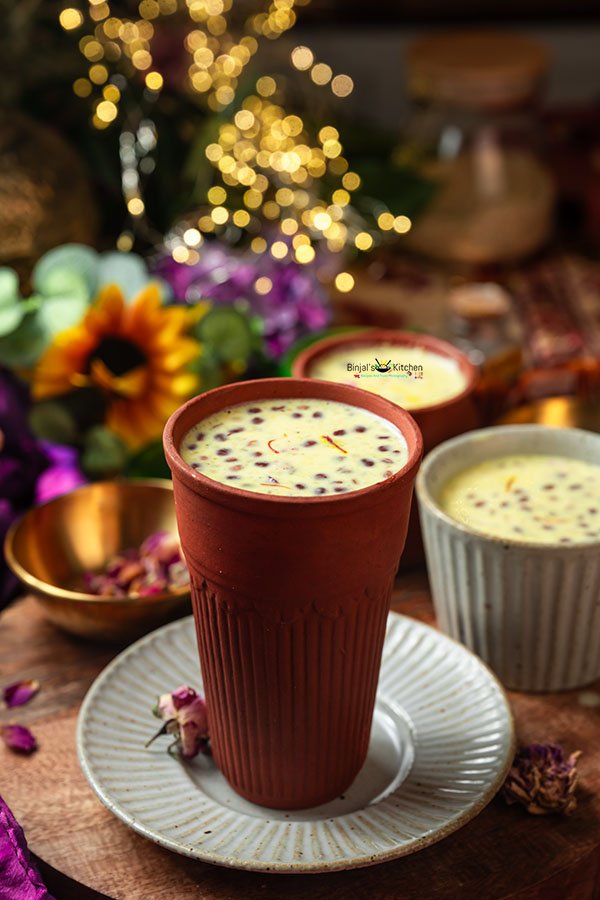
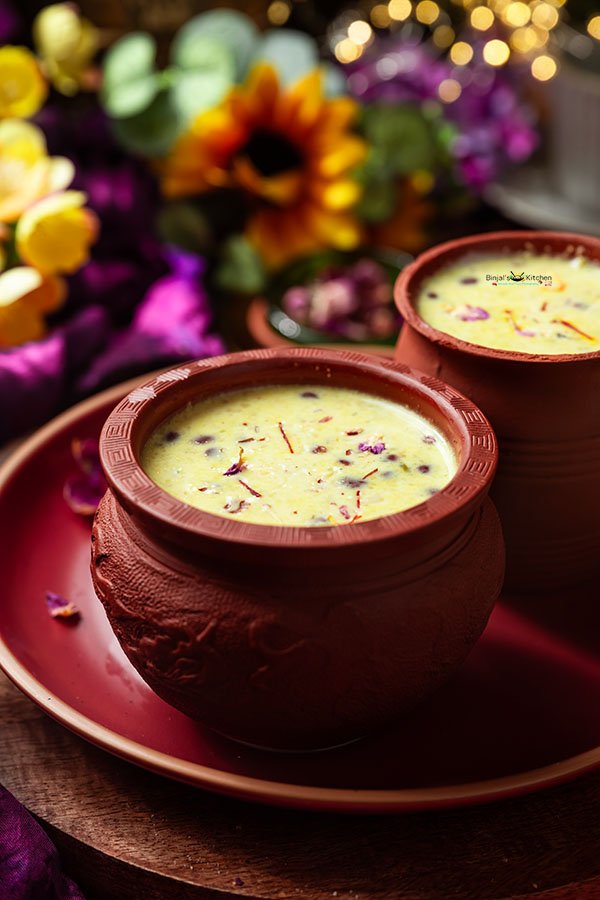
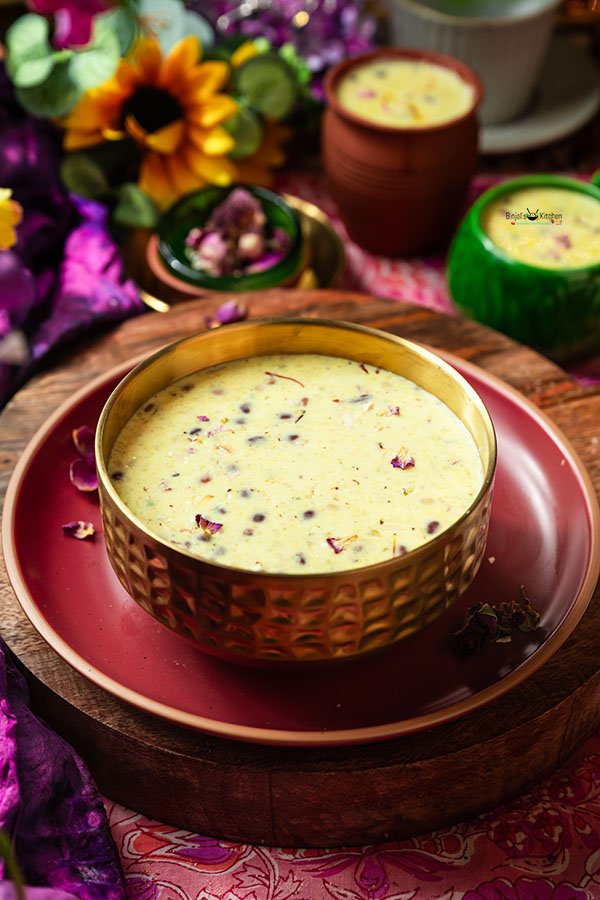
 Masala Dudh, also known as Masala Milk, is a rich, creamy, and aromatic Indian milk drink prepared with whole milk, sugar, saffron, nuts, seeds, and warming spices. It is traditionally enjoyed warm or chilled, depending on personal preference and the season. The combination of almonds, cashews, pistachios, cardamom, nutmeg, cinnamon, and saffron gives this delicious drink its signature flavor, beautiful golden color, and festive aroma.
Masala Dudh is especially popular in Maharashtra during Kojagiri Purnima, also known as Sharad Purnima, a full moon night celebrated during the Hindu month of Ashwin, usually in October. On this occasion, families often gather outdoors under the moonlight and enjoy a special serving of saffron infused milk. Kojagiri Masala Dudh is a cherished festive tradition in many Maharashtrian households, making the celebration even more memorable.
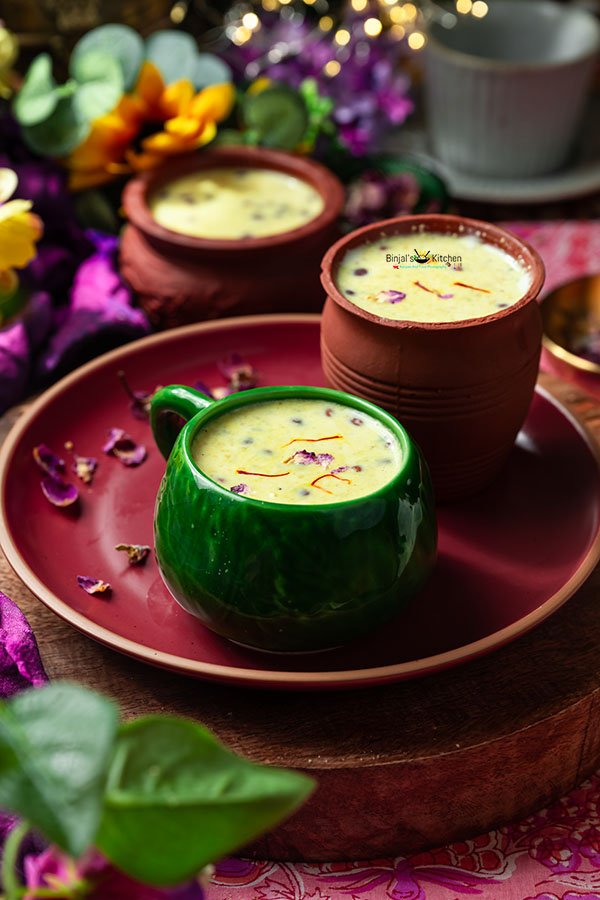 This flavorful milk is also a wonderful winter special drink because of its warming spices and nourishing nuts and seeds. It is often prepared during festivals, family gatherings, and chilly evenings when a comforting homemade beverage is welcome. You can serve it warm during colder months or refrigerate it and enjoy it chilled. Homemade masala powder makes this recipe extra special, and you can prepare a larger batch to use whenever you crave a delicious glass of Indian spiced milk.
 Ingredients
For Dudh
- 4-5 cups Whole Milk
- 2-3 tbsp Sugar, or adjust to taste
- A Few Saffron Threads
- 2-3 tbsp Prepared Masala Powder
- 1 tbsp Charoli (Chironji)
- Slivered Almonds and Pistachios, for garnish (Optional)
- Dried Rose Petals, for garnish
- A Little Water, to coat the bottom of the pan
For Homemade Masala Powder
- 2-3 tbsp Cashews
- 2-3 tbsp Almonds
- 2 tbsp Pistachios
- 1 tbsp Melon Seeds
- 1-2 tsp Khus Khus (Poppy Seeds)
- 4 to 5 Green Cardamom Pods, seeds only
- 1 Small Piece Nutmeg
- 1 Small Cinnamon Stick
- 3-4 Cloves
- 5-6 Black Peppercorns
- A Few Saffron Threads
- 1-2 tsp Dried Rose Petals
Note: The masala powder ingredients make more than you need for one batch of Masala Dudh. Use 2 to 3 tablespoons for this recipe and store the remaining powder in a clean, airtight jar in the refrigerator for future use.
Step by Step Method
- Boil and Reduce the Milk
. Add a little water to a heavy bottomed pan and swirl it around to coat the bottom. This helps reduce the chance of the milk sticking.
. Pour in the whole milk, add a few saffron threads and sugar, and bring it to a boil.
. Once the milk comes to a boil, reduce the heat to low medium and let it simmer until it reduces to approximately half its original quantity. Stir occasionally to prevent the milk from sticking to the bottom.
- Roast the Nuts and Seeds
. Meanwhile, heat a pan on low heat and add the cashews, almonds, pistachios, melon seeds, and khus khus.
. Dry roast gently, stirring continuously until the nuts become fragrant and the seeds are lightly toasted. Avoid over roasting, as this can affect the flavor.
. Remove from the pan and allow the mixture to cool completely.
- Prepare the Masala Powder
. Add the cardamom seeds, a small piece of nutmeg, cinnamon stick, cloves, black peppercorns, and a few saffron threads to a mixer grinder.
. Grind into a rough powder.
. Add the cooled roasted nuts and seeds along with the dried rose petals. Pulse again until you get a coarse powder. Avoid grinding for too long, as the nuts can release oil and turn into a paste.
. Transfer the prepared masala powder to a clean, dry jar.
- Add the Masala to the Milk
. Once the milk has reduced, add 2 to 3 tablespoons of the prepared masala powder and the charoli.
. Stir well to combine, ensuring that the masala is evenly distributed throughout the milk.
. Let it simmer for another few minutes so the nuts, seeds, and spices infuse the milk with their flavor. Stir occasionally and adjust the sweetness if needed.
- Cool and Serve
. Turn off the heat and allow the masala dudh to cool slightly.
. Serve warm in glasses or refrigerate until chilled.
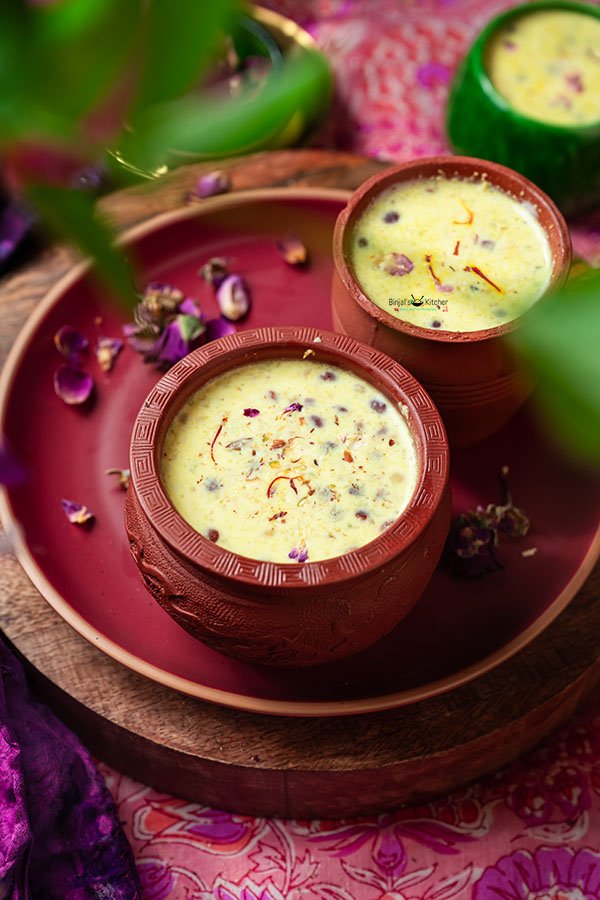
. Garnish with dried rose petals and slivered almonds and pistachios before serving. Enjoy this rich and aromatic homemade Masala Dudh with your family during Kojagiri Purnima or on a cozy winter evening!
 Tips for Making Perfect Masala Dudh
- Use whole milk: Whole milk gives the drink a naturally creamy texture and richer flavor.
- Reduce the milk slowly: Simmering on low medium heat helps concentrate the flavor. Stir frequently, especially as the milk thickens.
- Roast on low heat: Gently roasting the nuts and seeds enhances their aroma without burning them.
- Keep the masala coarse: A slightly coarse powder gives the milk a lovely nutty texture. Do not grind the mixture into a paste.
- Adjust the spice level: Nutmeg, cloves, cinnamon, and black pepper have strong flavors, so start with smaller quantities if you prefer a milder drink.
- Control the consistency: If the milk becomes too thick after refrigeration, stir in a little milk before serving.
- Make extra masala powder: Store the leftover powder in an airtight jar in the refrigerator to help preserve its freshness.
- Serve it your way: Enjoy it warm on winter evenings or chilled during Kojagiri celebrations.
 Serving Suggestions
Masala Dudh is traditionally enjoyed as a special drink during Kojagiri Purnima celebrations. Serve it in small glasses topped with slivered nuts and dried rose petals for a festive presentation. It also pairs beautifully with Indian sweets such as peda, burfi, ladoo, and other festive treats.
For a winter gathering, serve it warm after dinner. For a Kojagiri Purnima celebration, prepare it ahead of time, chill it in the refrigerator, and serve it under the full moon with your favorite homemade snacks and sweets.
Masala Dudh Recipe | Maharashtrian Kesar Masala Milk
Ingredients
Method
- Boil and Reduce the Milk
- . Add a little water to a heavy bottomed pan and swirl it around to coat the bottom. This helps reduce the chance of the milk sticking.
- . Pour in the whole milk, add a few saffron threads and sugar, and bring it to a boil.
- . Once the milk comes to a boil, reduce the heat to low medium and let it simmer until it reduces to approximately half its original quantity. Stir occasionally to prevent the milk from sticking to the bottom.
- . Meanwhile, heat a pan on low heat and add the cashews, almonds, pistachios, melon seeds, and khus khus.
- . Dry roast gently, stirring continuously until the nuts become fragrant and the seeds are lightly toasted. Avoid over roasting, as this can affect the flavor.
- . Remove from the pan and allow the mixture to cool completely.
- . Add the cardamom seeds, a small piece of nutmeg, cinnamon stick, cloves, black peppercorns, and a few saffron threads to a mixer grinder.
- . Grind into a rough powder.
- . Add the cooled roasted nuts and seeds along with the dried rose petals. Pulse again until you get a coarse powder. Avoid grinding for too long, as the nuts can release oil and turn into a paste.
- . Transfer the prepared masala powder to a clean, dry jar.
- . Once the milk has reduced, add 2 to 3 tablespoons of the prepared masala powder and the charoli.
- . Stir well to combine, ensuring that the masala is evenly distributed throughout the milk.
- . Let it simmer for another few minutes so the nuts, seeds, and spices infuse the milk with their flavor. Stir occasionally and adjust the sweetness if needed.
- . Turn off the heat and allow the masala dudh to cool slightly.
- . Serve warm in glasses or refrigerate until chilled.
- . Garnish with dried rose petals and slivered almonds and pistachios before serving. Enjoy this rich and aromatic homemade Masala Dudh with your family during Kojagiri Purnima or on a cozy winter evening!
- Use whole milk: Whole milk gives the drink a naturally creamy texture and richer flavor.
- Reduce the milk slowly: Simmering on low medium heat helps concentrate the flavor. Stir frequently, especially as the milk thickens.
- Roast on low heat: Gently roasting the nuts and seeds enhances their aroma without burning them.
- Keep the masala coarse: A slightly coarse powder gives the milk a lovely nutty texture. Do not grind the mixture into a paste.
- Adjust the spice level: Nutmeg, cloves, cinnamon, and black pepper have strong flavors, so start with smaller quantities if you prefer a milder drink.
- Control the consistency: If the milk becomes too thick after refrigeration, stir in a little milk before serving.
- Make extra masala powder: Store the leftover powder in an airtight jar in the refrigerator to help preserve its freshness.
- Serve it your way: Enjoy it warm on winter evenings or chilled during Kojagiri celebrations.