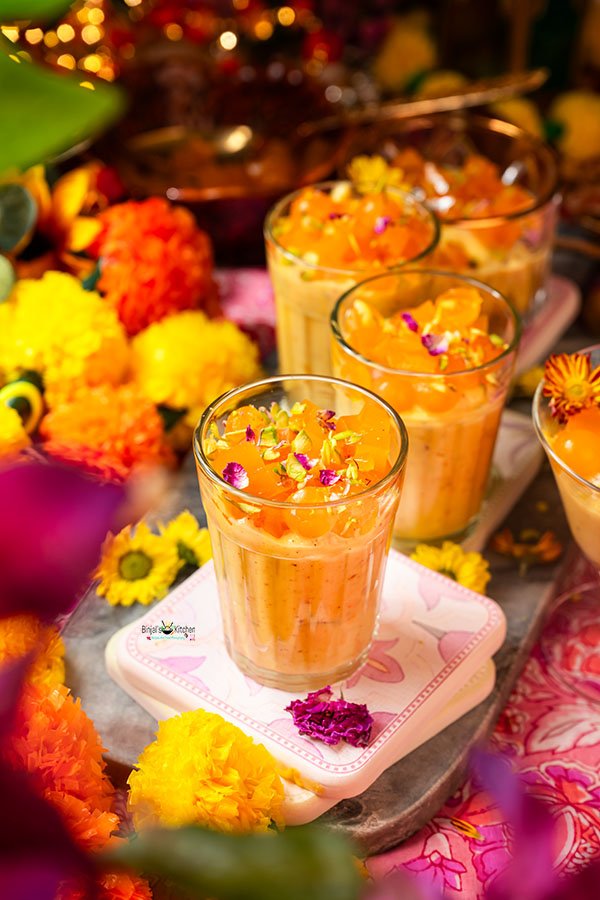
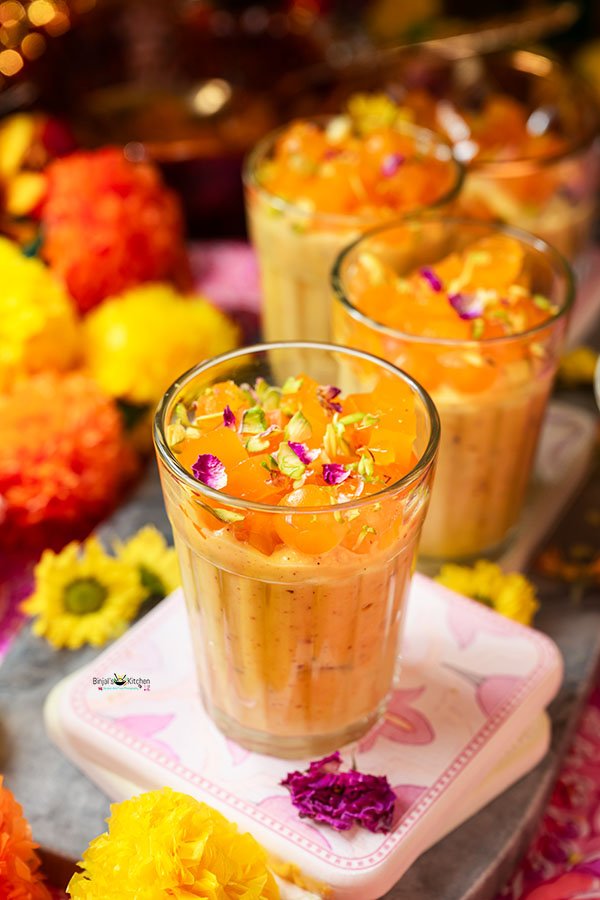
 A rich, creamy Indian fusion dessert with saffron rabdi, fresh orange pieces, and homemade orange jelly. Orange Rabdi with Orange Jelly is a beautiful Indian fusion dessert that brings together the richness of traditional Indian rabdi and the refreshing citrus flavor of fresh oranges. This dessert is a delightful combination of creamy, thickened milk infused with saffron, cardamom, nuts, and khoya, along with juicy orange pieces and homemade orange jelly. Every spoonful offers a wonderful contrast of creamy, fruity, and slightly chewy textures.
Rabdi, also known as rabri, is a traditional North Indian dessert that originated in the Indian subcontinent. It is especially popular in Rajasthan, Uttar Pradesh, and other parts of North India. Traditionally, rabdi is prepared by slowly simmering full-fat milk until it reduces and thickens, while layers of cream are collected and mixed back into the milk to create its signature rich and lachhedar texture. Saffron, cardamom, nuts, and sometimes khoya are added to make it even more delicious.
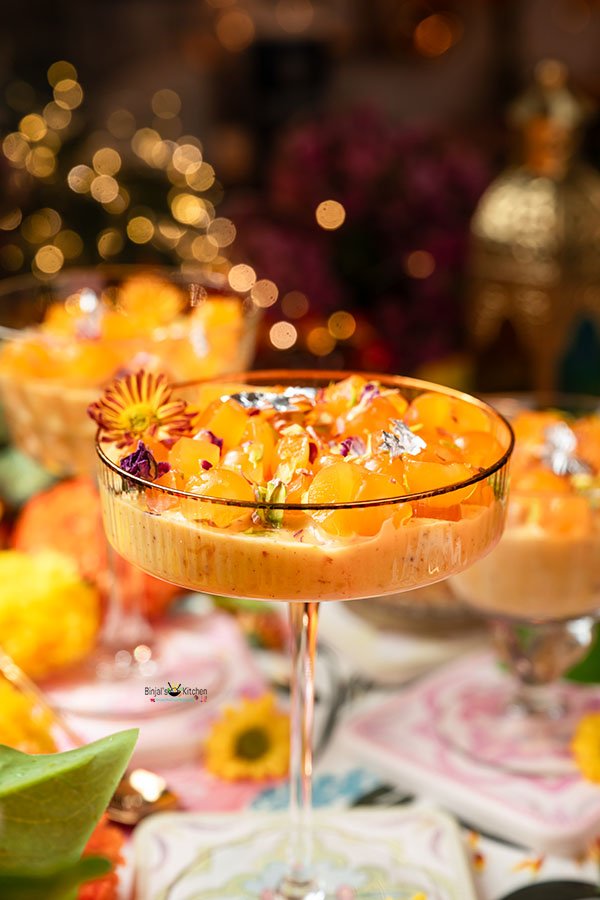 This orange rabdi is a modern twist on the traditional recipe. Fresh orange juice is transformed into homemade jelly using agar agar powder, while fresh orange pulp is folded into the chilled rabdi. The combination of citrusy orange flavor with aromatic saffron milk creates a refreshing and delicious fusion. The orange jelly adds a fun texture and makes the dessert visually appealing.
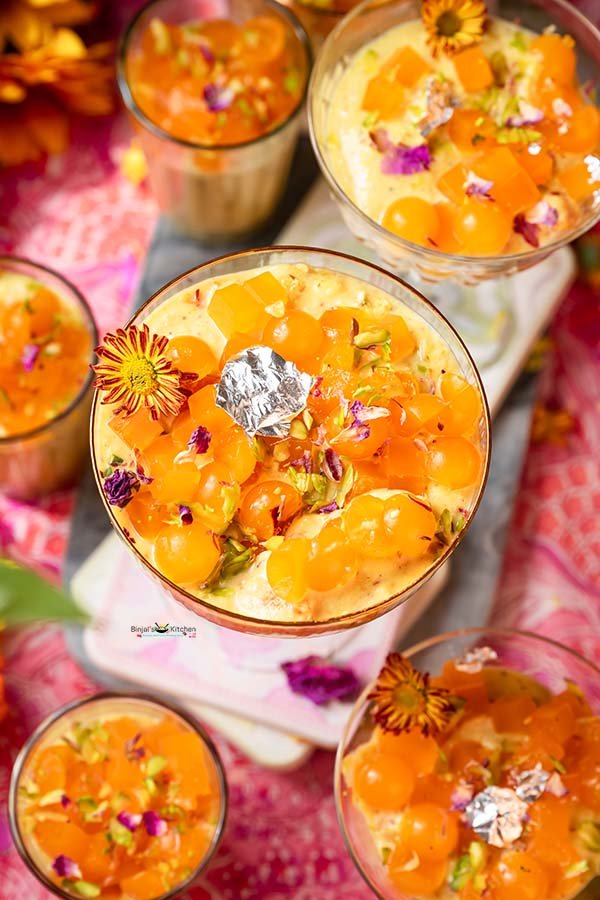
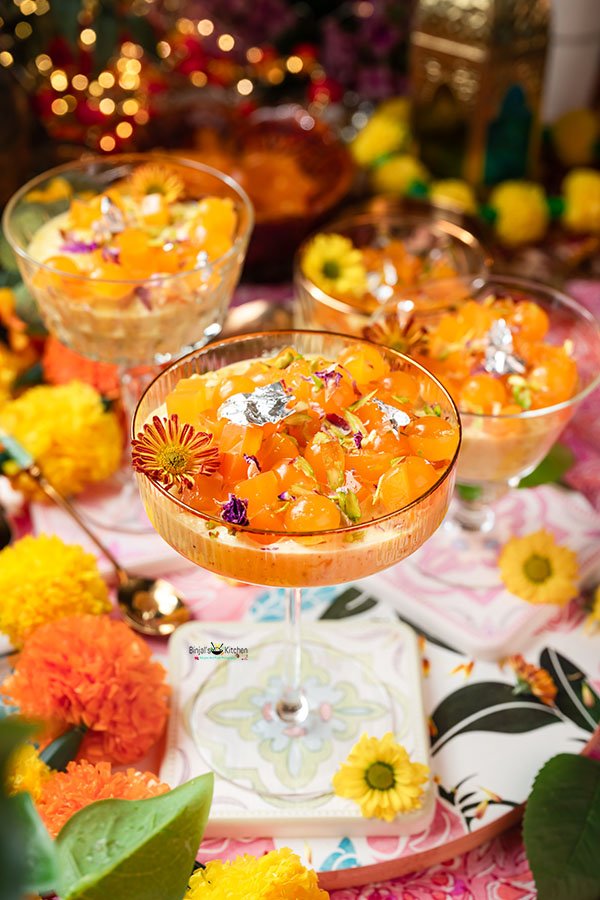
It is a perfect dessert to prepare for Diwali, Holi, weddings, dinner parties, and other special celebrations. Served in individual dessert cups and garnished with pistachios, dried rose petals, and edible silver varakh, this Orange Rabdi with Orange Jelly makes an elegant showstopper for your festive dessert table.
 Ingredients
For Orange Jelly
- 1½ to 2 Cups Fresh Orange Juice
- 1 to 1½ tsp Agar Agar Powder (adjust according to package instructions)
- 1 to 2 tbsp Sugar (optional, depending on the sweetness of oranges)
For Orange Rabdi
- ¼ cup Water
- 4-5 cups Full Fat Milk
- ½ cup Sugar (adjust to taste)
- Few Saffron Threads, Crushed
- ½ cup Mixed Nut Powder (Almonds, Cashews, and Pistachios)
- 1 tsp Kewra Water
- ½ cup Grated Khoya (Mawa)
- ¼ tsp Cardamom Powder
- 2 to 3 Fresh Sweet Oranges, Peeled and Chopped
For Garnishing
- Slivered Pistachios
- Dried Rose Petals
- Edible Silver Varakh
Method
Prepare Orange Jelly
- Squeeze fresh oranges to extract approximately 1½ to 2 cups of orange juice.
- Strain the juice if needed to remove seeds and excess pulp.
- In a saucepan, add the orange juice and agar agar powder. Mix well.
- If your oranges are sour, add a little sugar to balance the flavor.
- Cook over medium heat, stirring continuously, until the agar agar powder dissolves completely.
- Pour the prepared orange juice mixture into small silicone ice cube molds. I used small marble-shaped and mini cube-shaped molds.
- Alternatively, pour the mixture into a small tray and refrigerate until completely set. Once set, cut into small pieces using a knife.
- Refrigerate the jelly until ready to use.
Prepare Saffron Rabdi
- In a heavy-bottomed pan, add water. Swirl it around to coat the bottom of the pan. This helps prevent the milk from sticking.
- Add full-fat milk, sugar, and crushed saffron threads.
- Bring the milk to a boil, stirring occasionally.
- Once the milk comes to its first boil, add mixed nut powder, kewra water, and grated khoya.
- Mix well and continue cooking over medium heat, stirring frequently, until the milk thickens to a creamy rabdi consistency.
- While the milk is simmering, gently slide the layer of cream (malai) forming on top toward the sides of the pan.
- Repeat this process as the milk continues to cook and reduce.
- Once the rabdi reaches the desired thickness, scrape the collected cream from the sides of the pan using a spatula and mix it back into the rabdi. This creates the delicious, traditional lachhedar texture.
- Add cardamom powder, mix well, and turn off the heat.
- Allow the rabdi to cool completely.
Add Fresh Oranges
- Peel 2 to 3 fresh oranges and remove the seeds and white pith.
- Separate the orange segments and chop the pulp into small pieces.
- Once the rabdi has cooled completely, add the chopped orange pieces.
- Gently mix everything together.
- Transfer the orange rabdi to a container and refrigerate until thoroughly chilled.
Assemble Orange Rabdi Dessert Cups
- Take individual dessert serving cups or glasses.
- Add chilled orange rabdi to each serving cup.
- Top generously with prepared orange jelly pieces.
- Garnish with slivered pistachios, dried rose petals, and edible silver varakh.
- Serve chilled and enjoy this delicious festive Orange Rabdi with Orange Jelly!
 Tips for Perfect Orange Rabdi
- Choose Sweet Oranges: Use sweet, juicy oranges for the best flavor. If your oranges are sour, add a little sugar while preparing the jelly.
- Dissolve Agar Agar Properly: Always cook agar agar powder with the orange juice until it dissolves completely. Follow the package instructions for the correct quantity, as different brands may vary.
- Use Full-Fat Milk: Full-fat milk gives the rabdi a rich, creamy texture and better taste.
- Prevent Milk from Sticking: Adding a little water to the pan before pouring the milk helps reduce sticking and scorching.
- Create Lachhedar Rabdi: Keep moving the cream layer toward the sides of the pan while simmering. Scraping and mixing it back into the rabdi gives it the traditional layered texture.
- Cool Before Adding Oranges: Always allow the rabdi to cool completely before adding fresh orange pieces. This helps maintain their freshness and texture.
- Chill Before Serving: Refrigerate the rabdi for a few hours before assembling the dessert cups for the best flavor and consistency.
- Prepare Ahead: You can prepare the orange jelly and rabdi a day in advance. Store them separately in airtight containers in the refrigerator and assemble the cups just before serving.
 Serving Suggestions
Serve Orange Rabdi with Orange Jelly in individual dessert cups, small glass bowls, or elegant dessert glasses. The combination of saffron-infused creamy rabdi, fresh orange pulp, and colorful orange jelly makes it a beautiful addition to your Diwali sweets platter.
For a festive presentation, garnish with chopped pistachios, dried rose petals, and edible silver varakh. Serve well chilled after a traditional Indian meal or as a special dessert for parties, family gatherings, and celebrations.
Orange Rabdi with Orange Jelly
Ingredients
Method
- Squeeze fresh oranges to extract approximately 1½ to 2 cups of orange juice.
- Strain the juice if needed to remove seeds and excess pulp.
- In a saucepan, add the orange juice and agar agar powder. Mix well.
- If your oranges are sour, add a little sugar to balance the flavor.
- Cook over medium heat, stirring continuously, until the agar agar powder dissolves completely.
- Pour the prepared orange juice mixture into small silicone ice cube molds. I used small marble-shaped and mini cube-shaped molds.
- Alternatively, pour the mixture into a small tray and refrigerate until completely set. Once set, cut into small pieces using a knife.
- Refrigerate the jelly until ready to use.
- In a heavy-bottomed pan, add water. Swirl it around to coat the bottom of the pan. This helps prevent the milk from sticking.
- Add full-fat milk, sugar, and crushed saffron threads.
- Bring the milk to a boil, stirring occasionally.
- Once the milk comes to its first boil, add mixed nut powder, kewra water, and grated khoya.
- Mix well and continue cooking over medium heat, stirring frequently, until the milk thickens to a creamy rabdi consistency.
- While the milk is simmering, gently slide the layer of cream (malai) forming on top toward the sides of the pan.
- Repeat this process as the milk continues to cook and reduce.
- Once the rabdi reaches the desired thickness, scrape the collected cream from the sides of the pan using a spatula and mix it back into the rabdi. This creates the delicious, traditional lachhedar texture.
- Add cardamom powder, mix well, and turn off the heat.
- Allow the rabdi to cool completely.
- Peel 2 to 3 fresh oranges and remove the seeds and white pith.
- Separate the orange segments and chop the pulp into small pieces.
- Once the rabdi has cooled completely, add the chopped orange pieces.
- Gently mix everything together.
- Transfer the orange rabdi to a container and refrigerate until thoroughly chilled.
- Take individual dessert serving cups or glasses.
- Add chilled orange rabdi to each serving cup.
- Top generously with prepared orange jelly pieces.
- Garnish with slivered pistachios, dried rose petals, and edible silver varakh.
- Serve chilled and enjoy this delicious festive Orange Rabdi with Orange Jelly!
- Choose Sweet Oranges: Use sweet, juicy oranges for the best flavor. If your oranges are sour, add a little sugar while preparing the jelly.
- Dissolve Agar Agar Properly: Always cook agar agar powder with the orange juice until it dissolves completely. Follow the package instructions for the correct quantity, as different brands may vary.
- Use Full-Fat Milk: Full-fat milk gives the rabdi a rich, creamy texture and better taste.
- Prevent Milk from Sticking: Adding a little water to the pan before pouring the milk helps reduce sticking and scorching.
- Create Lachhedar Rabdi: Keep moving the cream layer toward the sides of the pan while simmering. Scraping and mixing it back into the rabdi gives it the traditional layered texture.
- Cool Before Adding Oranges: Always allow the rabdi to cool completely before adding fresh orange pieces. This helps maintain their freshness and texture.
- Chill Before Serving: Refrigerate the rabdi for a few hours before assembling the dessert cups for the best flavor and consistency.
- Prepare Ahead: You can prepare the orange jelly and rabdi a day in advance. Store them separately in airtight containers in the refrigerator and assemble the cups just before serving.